About Picnic at Hanging Rock
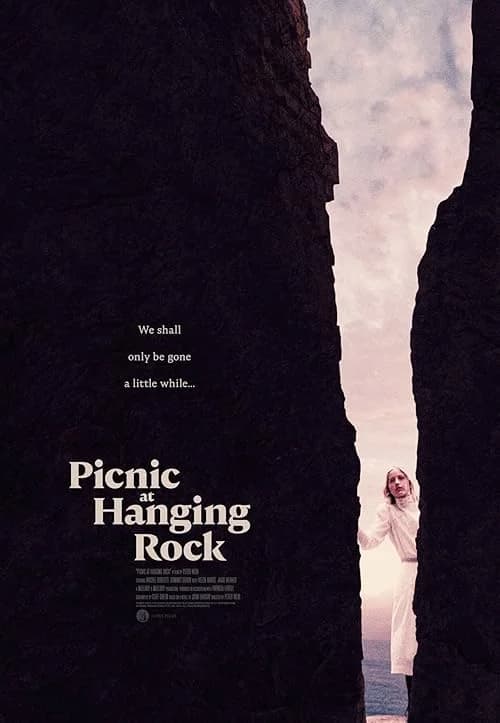
Peter Weir's 1975 masterpiece 'Picnic at Hanging Rock' remains one of Australian cinema's most haunting and enigmatic films. Set on Valentine's Day in 1900, the story follows students and teachers from Appleyard College for young ladies as they embark on a picnic to the ancient volcanic formation Hanging Rock. What begins as a genteel outing transforms into an enduring mystery when three students and one teacher vanish without explanation, leaving behind a community shattered by their disappearance.
The film's power lies not in solving the mystery, but in exploring its aftermath. Weir creates an atmosphere thick with repressed Victorian sexuality, colonial anxiety, and the unsettling presence of the Australian landscape itself. The rock becomes a character—ancient, indifferent, and potentially malevolent—contrasting sharply with the strict order of the school. Helen Morse, Rachel Roberts, and the ensemble of young actors deliver performances of remarkable restraint, their unspoken tensions speaking volumes.
Weir's direction is masterfully atmospheric, using dreamlike pacing, symbolic imagery, and an unforgettable pan-flute score to create a sense of lingering unease. The cinematography captures both the oppressive heat of the Australian summer and the eerie beauty of the rock formations. More than a simple mystery, the film explores themes of time, civilization versus nature, and the unknowable.
Viewers should watch 'Picnic at Hanging Rock' for its unparalleled atmospheric storytelling. It's a film that lingers in the imagination, refusing to provide easy answers while raising profound questions about loss, obsession, and the boundaries of rational understanding. Its influence on atmospheric cinema and mystery storytelling remains undeniable nearly fifty years after its release.
The film's power lies not in solving the mystery, but in exploring its aftermath. Weir creates an atmosphere thick with repressed Victorian sexuality, colonial anxiety, and the unsettling presence of the Australian landscape itself. The rock becomes a character—ancient, indifferent, and potentially malevolent—contrasting sharply with the strict order of the school. Helen Morse, Rachel Roberts, and the ensemble of young actors deliver performances of remarkable restraint, their unspoken tensions speaking volumes.
Weir's direction is masterfully atmospheric, using dreamlike pacing, symbolic imagery, and an unforgettable pan-flute score to create a sense of lingering unease. The cinematography captures both the oppressive heat of the Australian summer and the eerie beauty of the rock formations. More than a simple mystery, the film explores themes of time, civilization versus nature, and the unknowable.
Viewers should watch 'Picnic at Hanging Rock' for its unparalleled atmospheric storytelling. It's a film that lingers in the imagination, refusing to provide easy answers while raising profound questions about loss, obsession, and the boundaries of rational understanding. Its influence on atmospheric cinema and mystery storytelling remains undeniable nearly fifty years after its release.